Healthcare, Insurance

Uneasy Payers Seek More Guidance as ACA Exchange Deadline Nears

Originally published on Healthcare Dive.

As the June deadline for payers to decide whether to continue in the Affordable Care Act (ACA) exchanges and set their rates is approaching, insurance companies are running the numbers, reviewing their member populations and analyzing how they’ve made out on the exchanges market over the past year. But it’s not just their numbers that are influencing the decision.

What’s happening in Washington is also playing a major role — specifically, whether Republicans will pay cost-sharing reduction (CSR) payments to insurers. The payments help insurers cover lower income Americans.

Last week Trump reportedly told staff he was still considering withholding payments to push the hands of those reluctant to support the AHCA, so payers and patients advocates are quite leery of what would happen to the exchanges market if CSR subsidies stop.

Without those payments, insurance companies warn of higher rates and more payers dropping out of the exchanges market.

Beth Fritchen, partner at Oliver Wyman Actuarial Consulting, told Healthcare Dive that the best way to describe payers in the exchange market is “hesitant.”

“CSR is definitely something people are looking at and watching for,” Fritchen said.

Payers are also waiting to see the Senate’s healthcare reform, which will likely look quite different than the House bill.

ACA exchanges market stabilizing

You wouldn’t know it from the drumbeat from Washington, but one recent study found that the ACA exchanges market is stabilizing after years of losses.

A Kaiser Family Foundation study found that the individual market insurers’ medical loss ratio, which is the percentage of premium dollars that an insurer spends on medical claims, dropped 7 percentage points between 2015 and 2016 to 96%. That’s the best number since the ACA created exchanges, but is still higher than the 85%-90% figure needed to make the individual market profitable.

Despite those improved numbers, payers are still uncertain about the exchanges. Insurance companies usually don’t like the unknown, but that’s what they’re facing in the healthcare industry and specifically the individual market.

Brian Wright, senior financial professional at communications and advisory firm ICR, told Healthcare Dive that the unease comes because payers need a risk pool that doesn’t change dramatically from one year to the next.

The Center on Budget and Policy Priorities said the uncertainty will lead to higher rates and fewer insurers willing to continue in the exchanges. To stabilize the market, the group suggested Congress stop talking about repealing the ACA and focus on improving the current law.

Stopping short of agreeing not to repeal the ACA, there are other ways that Congress can help stabilize the market. America’s Health Insurance Plans President and CEO Marilyn Tavenner spoke before the Senate Committee on Health, Education, Labor and Pensions in February about the need to stabilize the individual health insurance market. Tavenner gave short-term and long-term solutions that she said would create “lower costs, more choices and better quality care.”

For this year, AHIP suggests continuing the CSR payments, creating premium tax credits, which help make coverage more affordable, and fully pay federal reinsurance payments for 2016. The reinsurance program helps cover high-need people, including those with chronic conditions.

Who’s in, who’s out for 2018?

As some payers have announced they are cutting back on the ACA exchanges or even pulling out completely in 2018, those who support repealing the ACA have stoked that instability to their advantage. ACA foes say payers pulling out shows that the exchanges are in a “death spiral,” but others point to the ACA foes as the ones promoting the fears, which lead to uneasiness.

So, where are we at this point in the ACA exchanges market? Aetna announced it is leaving the exchanges in its remaining states — Delaware, Nebraska, Iowa and Virginia. The payer said it could lose $200 million this year for its individual insurance after losing nearly $700 million between 2014 and 2016.

Wellmark Blue Cross Blue Shield is another payer that’s completely dropping out. The company will drop the exchanges plans for next year after reportedly losing $90 million from them over the past three years. Wellmark already dropped out of South Dakota’s exchanges last year.

A former big player in the exchanges market, UnitedHealth, scaled back from 34 states to three this year. For 2018, the company said it will remain “in only a handful of states.”

Not all payers are leaving the exchanges. CareFirst BlueCross Blue Shield plans to stay in the Maryland, Virginia and D.C. exchanges despite losing $500 million on the exchanges so far and another $100 million expected this year. Though the payer is staying, CEO Chet Burrell said the insurer plans a 58% increase for individual insurance plans next year.

BlueCross BlueShield of Tennessee announced last week that it planned on moving back into 16 counties in eastern Tennessee that would not have had any insurers in the exchanges after Humana announced it was pulling out in 2018. Humana is down to fewer than 200,000 members in the individual market in 11 states this year and plans to stop offering all ACA exchanges plans in 2018. Instead, it will redouble efforts on Medicare offerings.

Anthem is also expecting to stay in the exchanges. The company, which has 1.1 million members in ACA exchanges, is working on 2018 rates.

Kaiser Permanente is also staying onboard. Though acknowledging the market instability, Chief Executive Bernard Tyson recently said the market isn’t in a “death spiral.”

Will more drop out? Oliver Wyman conducted a survey in early April and asked insurers about the 2018 ACA exchanges markets. Of all the payers surveyed, a “vast majority” said they are committed to the exchanges, though they are still cautious. Only one survey respondent said it plans to leave the exchanges.

The survey also found that 70% of respondents expect to stay in the exchanges without any major strategy shift in 2018. The remaining 30% said they are looking for ways to stabilize their ACA lines of business, including modifying plan offerings, such as eliminating gold-level plans, and changing to plans with tighter benefit design, such as HMOs or narrower network plans, according to the survey results.

Nearly half of respondents said early April was too early to determine rate increases. However, for those that were ready to set rates, half of respondents said they plan to increase rates by 10% to 20%. One-quarter said they planned to increase rates by less than 10% and the other one-quarter said they expect to raise rates more than 20%. The average rate increase was 22% in 2017.

Fritchen says that disparity isn’t surprising given the exchange market’s fluidity. That said, Fritchen says payers are cautiously moving forward and some states have even said they will allow insurers to set rates and then change them if there is a new development, such as no CSR payments.

“Their number one goal is solvency,” she says.

The survey results found that payers plan to wait as long as possible before setting 2018 rates in hopes of getting more guidance from the government.

One important thing to remember about the survey is that it was conducted in early April. The longer payers don’t get reassurances that CSR payments are on their way, the more instability for the market and the greater likelihood that some payers may decide to drop out.

How much will rates increase? Cori Uccello, senior health fellow at American Academy of Actuaries, told Healthcare Dive “premium rate changes for 2018 will vary by state, and will reflect cost trends and changes in expected enrollment and composition of the risk pool.”

Uccello says factors that will affect decisions include the CSR payments, “whether the individual mandate is enforced, and the effects of new regulations that shorten the open enrollment period and tighten special enrollment rules.”

Payers will also soon know what risk-transfer payments they’re getting from the federal government. These numbers traditionally come at the end of June. The payments pay insurers for coverage, which keeps premiums and out-of-pocket costs lower than if there were no payments. You can expect rates to jump if the federal government decreases those payments.

Payers to watch

There are insurance companies whose decisions will greatly influence the ACA exchanges debate. Here are three payer decisions to watch, whose decisions could cause people with no option in the exchanges:

  • Anthem — The only payer in 59 counties in Kentucky.
  • Centene — The only option for all exchanges in Mississippi.
  • Cigna — The only insurer in 14 counties in Tennessee.

If any of these three pull out of those markets, there could be counties with no insurer option in the exchanges market, which could cause panic and send states scrambling. An insurer pulling out of those counties could lead to more uninsured or people going onto Medicaid, which will affect payments to hospitals and doctors.

What do unease and fluctuations mean for healthcare industry as a whole?

CSR payments don’t directly affect hospitals and doctors. These payments help payers cover lower income Americans. However, cuts to the CSR payments would lead to rate increases for individuals.

It could even cause payers to leave the exchanges. If rates skyrocket or if payers pull out, more Americans could be uninsured or go onto Medicaid, which has lower reimbursement rates than private payers. At that point, hospitals and doctors would feel the pain of uncompensated care and lower payments.

How does location affect payer decisions about whether to stay in exchanges?

Before the ACA, there was wide variety in regard to state regulations. Some states required certain types of coverage, while others had fewer mandates. The ACA leveled out a lot of those regulations and created a single risk pool.

However, states do vary in terms of population, cost, competition and provider networks. Payers with experience already in particular states know the market, the competition and how to price rates adequately. Highly competitive exchanges markets actually bring in more payers.

A recent Robert Wood Johnson Foundation study found that more competitors lead to lower premiums. Regions with only one or two insurers “tended to be sparsely populated and heavily concentrated in southern states.”

States with fewer rate fluctuations bring in more payers, said Fritchen.

Payers look at pricing, network strength and their relationships with provider networks when deciding whether to stay in a market or expand into another one.

“For the most part, they’re going to look at their block of experience to date and can they sustain any losses or can they fix it,” said Fritchen.

The future of the individual market

No one knows what plan the Senate will bring forward. There is only a two-vote swing in favor of the Republicans so the Senate will need to create a plan that doesn’t lose more than two Republican votes unless they get Democrats to support their plan.

Centralist Republicans will push for a similar ACA system or maybe even tweaks to the current system. They will also want to avoid Medicaid cuts. Conservatives, on the other hand, will want Medicaid cuts and will look to completely repeal the ACA.

Threading that needle will likely mean an even more difficult process than the onein the House, which narrowly passed the AHCA earlier this month.

What they decide and whether the government will continue to fund CSR payments will be major factors as to whether payers continue in the ACA exchanges or flee the market.

Healthcare

Nurse Burnout: 3 Low-Cost Ways Hospitals Can Help

Originally published on Healthcare Dive.Originally published on Healthcare Dive.

Nurses across the country are stressed, burnt out and thinking of leaving the profession. Surveys, polls and studies of all kinds point to nurses with longer hours, more work and less time to care for patients and unwind from the intense stress of the job.

A University of Phoenix College of Health Professionals 2016 poll found that four out of five nurses are playing a larger role in patient care management than two years ago and 84% of registered nurses believe non-doctors will play an even larger role in patient care management in the next five years. That means more work for nurses.

A recent Kronos Incorporated survey showed that 90% of nurses are thinking about leaving their hospital for another job because of a poor work/life balance. Also, most of the surveyed nurses (83%) said hospitals are losing good nurses because other employers offer a better work/life balance. “Nurse burnout is real, although some like to avoid or downplay it,” Elizabeth Scala, author of Stop Nurse Burnout, told Healthcare Dive. “In fact, there is often a stigma related to nurse burnout. Nurses fear that if they speak up, they will not be heard or worse . . . will be retaliated against in some way.”

 In addition to worsening the wellbeing of nurses themselves, burnout can lead to problems with patient safety and hospitals finances. However, there are steps hospitals can take to help ease burnout and some are relatively simple and inexpensive.

What’s causing burnout among nurses

A nurse’s workload, work/life balance and a nursing shortage are all contributing to stressed nurses. An RNnetwork study earlier this year found that 70% of nurses feel burnt out and half of the nurses have considered leaving the profession. Also, nearly half of nurses surveyed said their workload has increased.

Kronos Incorporated’s survey found that many nurses said they skipped breaks and didn’t get enough sleep in between shifts. One-quarter of those surveyed said a change from eight- to 12-hour shifts exasperated burnout.

Half of the nurses in a new CareerBuilder study said they feel “tired all the time.” Staffing isn’t expected to improve anytime soon. CareerBuilder said nursing job vacancies are “increasing at an accelerated rate.”

But hospitals and health systems are struggling to find enough qualified nurses to fill the jobs. CareerBuilder reported that hospitals posted a job listing for registered nurses an average of 10 times on different sites in the first quarter of this year, which points to a “highly competitive hiring environment” for hospitals and health systems.

This employment crunch can lead to larger workloads and longer hours for nurses.

But it’s not just more work and longer hours that is causing stress. Technology can also create a barrier between a nurse and a patient. Scala argued technology like electronic health records (EHRs) systems can make a nurse feel disconnected from patients.

EHRs can help improve care coordination. However, nurses may worry that they are simply inputting information and not making a difference for their patients, Scala said. “While the nurse went into the profession of nursing to provide relationship-based care and impact patients, the computers and charting can make it difficult for the nurse to feel as though they have the time to spend with the patient and family in front of them,” Scala said.

Nurses used pen and paper when Lisa Radesi started in the profession 38 years ago. Now, they have to spend a lot of their time on computers and using other technologies. Radesi, who currently serves as the academic dean at the School of Nursing at the University of Phoenix, told Healthcare Dive that computer and technology literacy are a relatively new skill set in nursing. “They have to be computer savvy and electronically savvy. Fifteen or 20 years ago, you didn’t have to be,” she said. “That’s a big role change for them.”

Nurses are also playing a larger role in the overall management of patient care. They are providing more care coordination, post-discharge management and pre-discharge work. Many nurses are taking on more leadership roles in health systems. Nurses have a great influence in patient care and often take on more roles, which can lead to overwork, according to Radesi.

How burnout impacts nurses, patient safety and a hospital’s finances

Studies have found that nurse burnout can impact patient infections, patient satisfaction and quality of care.

“Nurse burnout affects patient care negatively,” Scala said. “If a nurse shows up to work and is feeling tired, disengaged and unappreciated, then they are not going to provide their best care. They may make a mistake, such as forgetting to check in on a PRN medication or overlook a crucial lab value.”

Patients and families can pick up when a nurse is burned out, which leads to lower satisfaction, Scala added.

Burnt out nurses can also have a financial implication on hospitals. Nurses leaving the job means hospitals have to recruit, hire, train and orient new nurses. That costs a lot of money — not to mention what constant turnover can do to staff morale.

“In today’s healthcare environment, organizations are finding that nurses are leaving clinical roles in less than two years’ time,” Scala said. “The constant turnover can be costly to the organization’s bottom line.”

What hospitals can do to help nurses

An increasing number of surveys and studies point to a nurse burnout problem. But what can a hospital or health system do to help nurses who feel stressed out?

Lower nurse-to-patient ratios are one way to help. Implementing those types of levels can reduce stress levels while improving patient care, according to Radesi.

“A lower nurse-to-patient ratio “gives nurses the opportunity to take good care of patients from head to toe,” she said.

 Another idea is to implement hourly or purposeful rounding. A study on hourly rounding looked at how it affected patient satisfaction with nursing care. The report found that hourly rounding in inpatient care can “improve patients’ perceptions of nursing staff responsiveness in units where this may have been a problem, reduces patient falls and call light use, and improves patient satisfaction scores.”
The authors of the report recommended that nurse administrators implement an hourly rounding program to test out the idea and find “the most cost-effective approach.”Seun Ross, director of nursing practice and work environment at the American Nurses Association, told Healthcare Dive that she supports the idea. Frequent unit rounding can maintain awareness of the “pulse of the unit,” she said.
Seun Ross, director of nursing practice and work environment at the American Nurses Association, told Healthcare Dive that she supports the idea. Frequent unit rounding can maintain awareness of the “pulse of the unit,” she said.

One the two approaches has a cost connected to it, while the other may require making changes to the way nurses perform their work.

What does a health system or hospital do if it can’t afford to add more nurses or doesn’t have buy-in for hourly rounding? Here are three low-cost tips:

Watch for signs of stress

Spotting burnout isn’t easy, Scala noted. Nurses may come to work trying to hide their stress because they’re afraid of a reprimand.

A clear sign of burnout is less enthusiasm for the job. Other examples are a usually social nurse, who starts avoiding colleagues, and a team player who withdraws from team activities, such as projects and committees, according to Scala.

Ross argued hospitals monitoring changes in engagement and attendance can get a view on nurses’ stress levels. Nurses who miss shifts, leave early, complain more or disagree more with co-workers might need help.

Claudia Douglas, administrative director of the Institute for Evidence-Based Practice and Nursing Research at Hackensack University Medical Center, told Healthcare Dive that her facility conducts anonymous surveys to get feedback from staff and specifically runs a nurse satisfaction survey to get feedback from nurses. “The results are benchmarked against a national database,” Douglas said. “For areas indicating opportunity for improvement, leaders are required to complete an action plan.”

Stephen Young, research scientist of leadership insights and analytics at the Center for Creative Leadership, who co-authored “How Nurse Leaders Can Reduce Burnout: Focus on Mental Energy!” told Healthcare Dive that hospitals need to measure employees’ “mental energy levels and adopt initiatives that will most effectively enhance where energy is low within the organization.”

Staff with low mental energy may need a work shift scheduling change, while low emotional energy may “indicate a harmful interpersonal environment,” Young said.

Annual surveys aren’t enough, Young added. Instead, give employees game-based apps to use daily to examine their energy. That kind of energy assessment tool “can help you to objectively measure your organization’s human energy crisis and determine how severe it is,” according to Young’s report.

Teach self-care strategies

Scala, who teaches self-care strategies in her Burnout Proof Live training, argued it’s important for nurses to learn how to separate work from home life. Nurses need to learn how to leave work at home.

“Teaching individual nurses burnout prevention tools is one piece of this complex puzzle,” she said.

Young said engaging workers on their energy levels on a daily basis raises their self-awareness. With that data, a hospital could teach individualized strategies, such as coping and break scheduling.

“Nurses, like any human beings, are a diverse group,” Scala said. “Each nurse needs to find the self-care technique that works best for them. A variety of tools must be offered. The best thing an organization can do is to assess what the nurses want/need to cope and prevent burnout. And then to listen to the feedback, implementing a variety of strategies to support their nursing staff.”

Make wellness a priority

Surveys have found that nurses often work through their breaks. Nurses not having any time off during a shift can lead to higher stress levels.

Hospital leaders need to make sure their nurses are taking enough time off during their shift so they are alert.

One way to show the importance of wellness is to create wellness teams. Radesi believes having wellness teams can keep health front of mind for nurses and staff. Some ideas could be offering nurses massages during a shift, holding departmental group sessions to talk about health and creating a reward program connected to wellness, such as giving a prize to the staff member who walks the most.

Another example is setting aside space for wellness. Douglas Hackensack University Medical Center has respite areas with comfortable seating and soothing lighting. The areas promote mental, emotional, spiritual and social opportunities, Douglas said.

Employees often follow their leader — and wellness is no exception. Nurse leaders should model behaviors that can reduce burnout, such as practicing mindfulness, Young said.

By putting each employee’s wellness in the forefront, hospitals can improve morale and lower stress levels.

“In today’s healthcare environment, organizations are finding that nurses are leaving clinical roles in less than two years’ time. The constant turnover can be costly to the organization’s bottom line,” said Scala.

Understand your nurses

All of these tips go back to the same thing — get to know your nurses. Hospitals should look to improve communication with nurses and involve them in the decision-making process. Also, explain changes when they’re made. Nurses crave professional development, Radesi argued.

“The more they know, the easier it is for them to do their job,” Radesi said.

Hackensack University Medical Center’s leadership team holds Town Hall meetings on various shifts to help foster better communication, according to Douglas. “Hospital leadership must be engaged with their team members,” Douglas said. “They must be attuned to the challenges team members may face. Collaboration, partnership, active listening, and open and continuous lines of communication are essential.”


Insurance

Cheapest Car Insurance by Age and State

Originally published in CarInsurance.com. Go to the CarInsurance page to see the complete work, including search about charts.

Lowest insurance rates by age and state

South Dakota, North Carolina and Idaho have the cheapest car insurance rates in the country among six age groups, based on a rate analysis by CarInsurance.com.

Here are the cheapest states for car insurance by age group:

Age State with cheapest average yearly rate
20 North Carolina — $654
30 Idaho — $570
40 South Dakota — $537
50 South Dakota — $508
60 South Dakota — $479
70 South Dakota – $506


Location plays a major role in the cost of insurance. Our analysis found that rural states are more likely to have lower car insurance rates than congested states with large cities and suburbs.

When creating rates, car insurance companies look at the cost and frequency of claims in areas. Places with more crime, such as car thefts and break-ins, usually have higher rates than low-crime areas.

South Dakota is an example of a rural state that has some of the cheapest car insurance rates in the country. The state’s minimum car insurance requirements are similar to other states so what makes South Dakota so inexpensive?

South Dakota Insurance Director Larry Deiter says low auto thefts and the rural nature of the state helps. Its residents also have some of the “highest average credit scores” in the country. In most states, car insurance companies can factor a person’s credit score when devising car insurance rates. Insurers believe a strong credit score means the person is a lower risk than someone with poor credit.

Deiter lists another possible reason.

“Much of the population tends to drive pickup trucks or SUVs, which have higher safety ratings,” he says.

Another state with low rates is North Carolina. We found that North Carolina has the lowest rates for 20-year-old drivers.

Teen and young adult drivers often pay the highest car insurance rates. Insurers view young drivers as risky because they are inexperienced and may take more risks than a middle-aged driver.

The North Carolina Department of Insurance tells CarInsurance.com that one reason for the low car insurance rates for 20-year-olds is that insurers in the state only have a high-rate period for three years from ages 16-18. Other states stretch out that period for seven or eight years, which means higher rates for drivers well into their 20s. So, 20-year-old North Carolina drivers don’t get hit with the same high rates as other states.

The low rates may be coming to an end in North Carolina. The North Carolina Rate Bureau requested a 13.8 percent average increase after not raising rates since 2009. If that’s approved, car insurance rates will increase for all drivers, including 20-year-olds.

So, which states have the cheapest car insurance? We drilled down by age group to show how states fare in each age group.

State averages are based on rates for nearly every ZIP code in each state for each age group for three coverage levels.

Cheapest car insurance for 20-year-olds by state

As mentioned above, North Carolina is the cheapest car insurance for drivers age 20. It wasn’t even close.

Here are average rates for drivers age 20:

GO TO CARINSURANCE.COM TO SEE THE CHART.


Cheapest car insurance for 30-year-olds by state

The cheapest car insurance for 30-year-olds is the largely rural state of Idaho. Fewer cities and metropolitan areas often mean lower rates for a state. Why? Because cities usually have more auto thefts and break-ins than small towns and villages.

Here are average rates for drivers age 30:

GO TO CARINSURANCE.COM TO SEE THE CHART.

Plus, adding a teen driver to your insurance policy can cost in the thousands. Before adding your teen to your policy, it’s a good idea to request rates for car insurance companies to see who charges the least for teen drivers.

Here are average rates for drivers age 40:

GO TO CARINSURANCE.COM TO SEE THE CHART.

Cheapest car insurance for 50-year-olds by state

The home of Mount Rushmore and Wall Drug Store tops the list for 50-year-olds with Idaho and Iowa a close second and third.

Here are the average rates for drivers age 50:

GO TO CARINSURANCE.COM TO SEE THE CHART.

Cheapest car insurance for  60-year-olds by state

The same three states have the cheapest car insurance rates for 60-year-olds.

Here are average rates for drivers age 60:

GO TO CARINSURANCE.COM TO SEE THE CHART.


Cheapest car insurance for 70-year-old by state

South Dakota tops the list again but is joined by the one and only Northeast state (Maine) to make the list. Maine has the oldest population with a median age of 44 years old, which is nearly seven years older than the national average. Those older Mainers are enjoying low car insurance rates.

Here are the average car insurance rates for 70-year-olds:

GO TO CARINSURANCE.COM TO SEE THE CHART.


How age affects car insurance rates

Young drivers pay the highest car insurance rates because of their inexperience and greater risk of getting into accidents.

Car insurance companies want to reduce the number of claims paid out, so those in age groups that are considered the riskiest have to pay the highest rates.

As you spend more time behind the wheel, your rates will likely go down unless you file multiple claims. Once drivers get into their 30s and 40s, they should see their car insurance premiums drop.

Plus, as you age, you are eligible for auto insurance discounts that bring down rates. Car insurance discounts include bundling your home and car insurance, good driver, and loyalty when you stay with the same insurer for a long time.

Now, here’s the bad news — your rates will likely begin to increase again once you hit your senior years. Elderly drivers are considered riskier than middle-aged drivers. Older people’s reaction times may slow, which can lead to accidents. That means higher car insurance rates for the older age groups.


Shopping for car insurance

No matter your location or age, it pays to shop around for car insurance. Insurers price the same policies differently based on their respective formulas. Each insurance company has a different algorithm that weighs risk factors. That’s why costs vary and it’s important to do a car insurance comparison before you buy.

For instance, one insurance company may charge a lot more if you get speeding tickets, while another may not raise rates that much. Another example is one insurer may charge higher rates for young drivers or motorists who live in cities, while another might give you a break.

It’s a smart idea to get car insurance quotes from at least three car insurance companies every couple of years. Provide multiple insurers with the same request, including coverage levels, and let them compete against one another. Make sure you take everything into account, including loyalty discounts or new customer discounts, when making the decision as to the right car insurance company for you.

Healthcare

How Hospitals Can Prepare for an Influenza Pandemic

Originally published on Healthcare Dive.

Public health officials agree that the next major pandemic will be influenza. Are U.S. hospitals ready for it?

The U.S. Department of Health and Human Resources (HHS) estimates that an infectious disease pandemic could infect 90 million Americans and kill as many as 1.9 million people. This kind of pandemic would put a strain on the country’s healthcare system, sicken hospital staff and stretch hospital resources to their limits and beyond.

An influenza pandemic would go well beyond the normal seasonal flu virus. Patients’ immune systems won’t be able to cope with a pandemic flu, and it will spread quickly across the globe.

This isn’t just the stuff of science fiction. There have been multiple pandemics over the past century.

The Spanish Flu of 1918 caused more than 50 million deaths. Between 20% and 40% of the world became infected. The late-1950s saw the Asian flu, which killed about 2 million people, including 70,000 in the U.S. In recent years, the H1N1 virus in 2019 killed 17,000 people worldwide.

Billionaire Bill Gates spoke about the pandemic threat earlier this year during a security conference in Munich.

“Imagine if I told you somewhere in this world, there’s a weapon that exists — or that could emerge — capable of killing tens of thousands, or millions of people, bringing economies to a standstill and throwing nations into chaos,” Gates said. “Whether it occurs by a quirk of nature or at the hand of a terrorist, epidemiologists say a fast-moving airborne pathogen could kill more than 30 million people in less than a year.”

Hospitals across the country are now planning and testing models to implement when an infectious disease pandemic eventually hits the U.S.

Are we prepared?

A 2015 report “The Next Pandemic: Hospital Management” examined how a pandemic could impact the healthcare system, the state of preparedness of hospitals and special considerations for them during a pandemic.

The authors of the report, Robert E. Falcone, vice president of clinical policy and population health at the Ohio Hospital Association and clinical professor of surgery at Ohio State University, and Andrew Detty, quality and population health analyst at the Ohio Hospital Association, warned that a severe pandemic like the 1918 flu could: infect 90 million Americans, hospitalize 9.9 million and kill 1.9 million.

To put that into perspective, the H1N1 virus in that impacted the country from 2009 to 2010 increased emergency department (ED) visits by 18% over the baseline in from 2005 through 2008 with individual hospitals and health systems seeing much higher rates.

Part of the issue with H1N1 was not so much that people were infected, but that they were afraid that they or their children had the H1N1 virus and rushed to EDs, according to the 2015 report. That caused a major drain on the healthcare system.

Preparing for a pandemic

The National Strategy for Pandemic Influenza involves three parts: preparedness and communication; surveillance and detection; and response and containment.

Over the past decade, the federal government has sounded the alarm about a potential pandemic. The Centers for Disease Control and Prevention (CDC) created a free program for hospitals called FluSurge 2.0 to figure out the number of hospitalizations, intensive care unit (ICU) admissions, ventilators needed and deaths caused by an influenza pandemic.

Hospitals and health systems, in turn, have employed full-time incident coordinators, created pandemic preparedness committees with clinical, support and senior administrative representatives and participated in regional hospital planning.

Colin Bucks, medical director for the office of emergency medicine at Stanford Health Care in Stanford, CA, tells Healthcare Dive Stanford has a standing committee of 20 people that includes specialists in disease prevention, infection control and infectious diseases. The group meets quarterly to review plans, monitor infectious disease and bioterrorism updates, look for potential outbreaks, implement infection control procedures and decide when to start screening methods to prevent infections from spreading.

They also promote patient education, such as communicating with at-risk populations, informing patients about when to go to the hospital and educating people about proper disease-prevention hygiene so that they take the proper precautions to prevent infectious diseases.

Bucks says the health system also learns by reviewing how other health officials respond to crises, such as the SARS outbreak in Toronto in 2003 and the Ebola pandemic in 2014 and 2015, which he saw firsthand.

“It’s good to take the path that’s been tread before,” Bucks says of learning how healthcare facilities have tackled other emergencies. “Let’s learn from folks who have gone through major events.”

Preparing for a pandemic isn’t cheap. A 2006 report called “Biosecurity and Bioterrorism: Biodefense Strategy, Practice, and Science” estimated a 164-bed hospital would need to spend $1 million to prepare for a pandemic, including $200,000 for a pandemic plan, $160,000 for staff education and training, $400,000 for stockpiling minimal personal protective equipment (PPE) and $240,000 to stockpile basic supplies.

Joan Ivaska, senior director of infection prevention at Banner Health, based in Phoenix, Ariz., tells Healthcare Dive she’s not able to put a dollar amount on how much the large health system has spent on influenza pandemic preparation. Banner, which has 28 acute care facilities in six states, has committed resources to emergency management and infection prevention programs for any emergencies.

“Banner Health takes an all-hazards approach to preparedness for an influx of infectious disease patients,” Ivaska says. “We maintain plans for responding to an influx of infectious patients, whether from influenza or some other disease,” she adds.

Staff education and drills

It’s one thing to put down a plan on paper. It’s quite another thing to put it into action. Education and training drills help hospital staff, and administrators get more comfortable with a plan before there’s an influenza pandemic.

The Occupational Safety & Health Administration recommends that staff education and training include infection control precautions, how to report pandemic influenza to hospital and public health officials, proper PPE usage, hand hygiene, training of infection control monitors and tabletop simulation exercises.

Banner Health reviews emergency response plans on a routine basis and conducts staff training and drill exercises every year, says Ivaska.

“We have staff with expertise in infection prevention and control and emergency management who coordinate these activities as part of their ongoing responsibilities,” she says.

Stanford Health Care tested an ED “drive-through” a few years ago to rapidly evaluate patients outside of the hospital environment to prevent cross-infection during a pandemic. In the test, hospital staff evaluated patients still in their vehicles or next to their vehicles.

The hospital tested the feasibility of the external influenza clinic and measured throughput times of simulated patients. Stanford Hospital used 38 patient charts from people treated during the H1N1 outbreak in 2009 to simulate the scenarios. It found that the medical length of stay was 26 minutes and physicians were able to identify the patients admitted and discharged during the real ED visit with 100% accuracy.

The ED drive-through and other programs that look to limit the spread of infectious disease focus on patient screening. They also seek to protect staff who meet patients first, including administrative staff, clerks, greeters, and security, as well as doctors, nurses and housekeeping staff. Stanford Health Care makes sure there are hand-washing supplies, masks, and other PPEs to protect them from infectious illnesses.

Stanford Hospital officials said the drive-through model is a “feasible alternative to a traditional walk-in ED or clinic and is associated with rapid throughput times. It provides a social distancing strategy, using the patient’s vehicle as an isolation compartment to mitigate person-to-person spread of infectious diseases.”

Bucks says Stanford hasn’t needed to test or implement the ED drive-through model again, but it’s in the emergency plan when needed. However, Stanford has needed to readapt the model because of changes to buildings or new facilities in the system, such as the new Stanford Hospital, which is slated to open in 2018.

“We haven’t had to activate that in anger, but it’s still a standing part of our response procedures,” says Bucks.

Bucks says the ED drive-through works for Stanford Health Care and other hospitals can start a similar program with proper planning and testing. “I think others can look at this and implement it, but I wouldn’t be under the illusion it could happen as a just in time,” says Bucks about the need for planning and testing the plan.

Stanford’s model is one of many that tried to limit potential exposure. Another example is triage telephone lines. The Minnesota Department of Health collaborated with health plans and hospital systems to establish MN FluLine.

MN FluLine uses standardized triage protocol and registered nurses talk to patients about their symptoms, when to seek medical care, and offers prescriptions to high-risk patients who are advised to stay home. MN FluLine believes the program has prevented about 11,000 face-to-face healthcare encounters. The CDC is looking at similar triage phone lines to see if it can reduce the spread of infectious diseases.

Shortages

An influenza pandemic would quickly fill EDs and ICU beds and could cause staffing, ventilator and PPE shortages if hospitals aren’t prepared.

A 2010 study found that there were a little more than 62,000 full-feature mechanical ventilators in U.S. acute care hospitals. That’s about one for each ICU bed.

The SARS outbreak of 2003 in Canada is an example of what happens to supplies when hospitals are overwhelmed with an infectious disease. In Toronto, one 1,300-bed hospital used 3,000 disposable isolation gowns, 14,000 pairs of gloves, 18,000 N95 respirator masks, 9,500 ear loop masks and 500 pairs of goggles daily during the peak of the outbreak. The HHS recommends that hospitals stockpile disposable N95 respirators and surgical masks, face shields, gowns and gloves in case there’s a pandemic.

Banner maintains an inventory of essential supplies and equipment in the event of an influx of infectious patients, according to Ivaska. The health system would also partner with public health partners for specific needs if there’s a pandemic.

In terms of staffing, hospitals may need to bring in more staff to help with patient care and hospital upkeep to minimize the spread of the virus.

Hospital staff would also likely become sick themselves. One estimate suggests 40% of hospital staff would be absent during a pandemic because they’re sick, caring for a sick family member or they may even refuse to come to work for fear of getting sick.

Hospitals may need to call in volunteers, medical students, nursing students and retired healthcare workers to help hospital staffing during a crisis.

There is also the issue of staff, patient and community well-being. In “The Next Pandemic: Hospital Management,” the authors pointed to the 2003 SARS outbreak as an example of what happens to staff during a health crisis.

Quarantine during the SARS outbreak “caused fear, anger, loneliness, and boredom among isolated patients, and the fear of becoming infected and restrictions on activity caused discomfort for uninfected patients,” the authors wrote. “Healthcare workers expressed fear and resentment in the face of the danger of infection and constantly changing information; social isolation exacerbated their anxiety, as did concern about infecting loved ones.”

There is also the issue of hospitals needing to segregate flu patients to reduce spreading the disease. In case of a pandemic, a hospital may need to move patients to specific parts of a hospital or even to off-site locations.

Bucks says Stanford Health Care has used external facilities at times and the system would likely need to implement a similar plan if there is a flu pandemic.

Banner Health takes a whole system approach if there’s an influx of infectious patients or other healthcare emergencies, Ivaska says. How specifically the system would respond to a specific emergency depends on a number of factors, including a facility’s location, infrastructure, capabilities and staffing, she adds.

Planning for a pandemic in the current political climate

The federal government helps hospitals and health systems prepare for a possible health crisis through training and grants, such as $850 million in Hospital Preparedness grants.

But there is concern that federal money may soon dry up. In his budget outline in March, President Donald Trump proposed cutting nearly 18% from the Department of Health and Human Services budget. The president also proposed cutting almost $6 billion from the National Institutes of Health and another $400 million from training programs for nurses and other health professionals.

The Obama administration spent $1 billion on the Global Health Security Agenda, which focused on global health security, including preventing pandemics. That funding ends in fiscal year 2019, and the Trump administration hasn’t said whether it will continue.

Congress will ultimately decide on the actual budget, and will likely ignore many of Trump’s proposed health services cuts. In response to the president’s proposed cuts, Rep. Tom Cole (R-OK), who chairs the House Appropriations subcommittee on labor, health and human services, education and related agencies, called the health agencies “the front lines of defense for the American people for some pretty awful things.”

“If the idea of a government is to protect the United States and its people, then these people contribute as much as another wing on an F-35, and actually do more to save tens of thousands of lives,” he said, referring to Trump’s plan to increase military spending while decreasing money for health services.

Insurance

Teen Driving Safety: Least and Most Dangerous States

Originally published in CarInsurance.com.

An analysis of states based on safety and insurance cost factors shows that Maryland, New York and Pennsylvania have the safest driving environment for teens, while Montana, North Dakota and Kansas have the worst.

Getting your license is a rite of passage for teens, but that privilege comes with responsibility. As teens get ready for prom season, CarInsurance.com looked at teen driver safety and insurance costs by state to see which states are the safest for teen drivers. We ran the numbers and found that the safest driving environments for teens are in:

  1. Maryland
  2. New York
  3. Pennsylvania
  4. Connecticut
  5. Massachusetts

On the flip side, the states with the worst numbers are:

  1. Montana (51)
  2. North Dakota (50)
  3. Kansas (49)
  4. Wyoming (48)
  5. Alabama (47)

This is the second year that CarInsurance.com performed this analysis. Maryland and Massachusetts are the only states from last year’s top three to again make the top three this year (Massachusetts and Alaska were first and third respectively last year).

Montana and North Dakota are again the bottom two states this year. Last year, Louisiana joined them as third from the bottom.

The analysis comes at a time when the latest numbers from the National Highway Traffic Safety Administration (NHTSA) show an increase in the number of teen driver-related fatal accidents.

The 2015 figures show that young drivers were involved in 1,886 fatal accidents. This is a 9 percent jump from 2014 (1,886 vs. 1,723). Teen drivers were also involved in 14 percent more crashes in 2015, according to the NHTSA.

Despite those sobering figures, young driver fatalities are still much lower than a decade ago. The NHTSA said fatal crashes involving young drivers dropped 43 percent from 2006 to 2015. That’s an encouraging trend despite the alarming 2015 figures.

Most and least safe states for teen drivers

To identify the best and worst states for teen drivers, CarInsurance.com analyzed five teen-driving metrics:

  • Number of teen driver fatalities per 100,000 population
  • Effectiveness of Graduated Driving License (GDL) components
  • Teen drinking and driving rates
  • Teen emailing/texting and driving rates
  • Average annual insurance costs for teen drivers, which is a reflection of the risk level for this driving group

We gave each state a weighted score to determine rankings, with the safest states topping the list and the states with the lowest scores at the bottom.

Maryland topped our list this year as the safest state for teen drivers, after finishing second last year. The state had a low number of teen-related fatal accidents in 2015 (.3 per 100,000 residents) and has some of the strongest GDL laws in the country.

Last year’s safest state, Massachusetts, dropped to fifth place this year. The Bay State continued having one of the lowest teen-related fatal accident rate and strong GDL laws, which helped it to edge out California and Virginia for the No. 5 rank.

The new Centers for Disease Control and Prevention Youth Risk Behavior Surveillance System results about drunk driving and texting while driving were the major differences this year. Massachusetts survey numbers were worse than Maryland’s, which contributed to Massachusetts dropping from the top spot.

On the other side, Montana and North Dakota remained in the bottom two spots. Both states had a high per capita number of fatal accidents involving teens, lacked strong GDL provisions, and experienced poor teen survey results for drinking while driving and texting while driving.

Here is the full list from No. 1 to No. 51. SEE FULL CHART ON ORIGINAL ARTICLE.

Teen driver fatalities numbers on the rise

Despite much better numbers over the past 10 years, motor vehicle crashes are the number one cause of death for 15- to 20-year-olds, according to the National Center for Health Statistics.

Plus, the fatal accidents numbers for 2015 are a concern, but groups like NHTSA are working to move the trend back in the right direction.

“Obtaining a driver’s license is an important milestone in any young person’s life,” says the NHTSA. “It is also a privilege and responsibility that requires commitment from all parties involved. For teens, parents, driving instructors and peers, safety behind the wheel benefits everyone on the road ahead.”

Kara Macek, senior director of communications and programs at the Governors Highway Safety Association,  (GHSA) says some of the reasons behind the increase are an improved economy, so teens have more disposable income, people traveling more, and lower gas prices. Teens using social media and messaging apps behind the wheel also play a large role.

“Since there’s no one reason for the increase, advocates and officials need to take a multi-faceted approach to teen driver safety and look for a variety of solutions,” says Macek.

Older teens in more fatal crashes than younger teens

The GHSA recently released a report called “Mission Not Accomplished: Teen Safe Driving, the Next Chapter” that showed a higher rate of fatal crashes among older teens rather than 16- and 17-year-olds.

The GHSA analyzed fatal crash data from 2005-2014 that involved drivers 15 to 20 years old. Though teen driver involvement in fatal crashes decreased by 48 percent in that time, the report dug deeper into the crash data and found that older teens account for most teen drivers killed during the 10-year period. The top age groups for fatalities were 19-year-olds, 20-year-olds, and 18-year-olds.

Macek says the figures are “alarming, though not altogether unpredictable.”

Here’s one possible reason — limits on GDL provisions. GDL laws ease teens into driving while they mature behind the wheel. The GDL process usually includes a learner’s permit, an intermediate license, which puts limits on driving, and finally a license with full privileges. The limits often restrict nighttime driving or operating a vehicle with other teens in the car.

The GDL laws usually stop at the age of 18, which means older teens have fewer driving restrictions. This could be a factor in the higher percentage of fatal crashes for older teens.

Macek says many teens wait to get their licenses at 18 or 19, which means they don’t have to comply with GDL restrictions — though they’re new drivers.

“As the report shows, one in three teens isn’t licensed by the age 18, which means that when they get their license, they often aren’t going through the graduated driver licensing process and getting the education necessary to learn safe driving skills,” says Macek. “For teens that were licensed at 16 or 17, by the time they’re 18 or 19, they’ve gotten comfortable driving, forgotten some of the training, and are likely to start taking more risks — even though they’re still fairly inexperienced drivers.”

As a way to combat this issue, Macek says the GHSA suggests that all states increase GDL laws for drivers until the age of 21. Only New Jersey has that kind of restriction.

“Expanding GDL would ensure that the vast majority of people getting a driver’s license for the first time have received adequate training and education on safe driving,” she says.

The GHSA is advocating that states strengthen GDL laws to improve driver safety.

“While 18 may be the age of majority in most states, its arrival does not mean a teen driver is now risk-free,” said the GHSA in its report. “It takes time — as much as three to five years — for a teen driver to gain the experience and the maturity needed to advance from being competent and tactical to strategically skilled.”

Graduated license laws 

Both the GHSA and NHTSA agree that GDL laws have played a key role in reducing fatal accidents involving teens over the past decade.

“For the most part, GDL is the most effective countermeasure we have seen that contributed to the decline in teen driver fatalities,” says Macek.

States devise their own GDL system, so there are great variations between states. States with the strongest GDL laws have seen the highest reduction in fatal-related crashes, according to the Insurance Institute for Highway Safety (IIHS) and the Highway Loss Data Institute (HLDI).

According to IIHS, 13 states could sharply reduce fatal crash rates among 15- to 17-year-olds if they adopted the five strongest GDL provisions. The five states that could reduce teen fatal crash rates the most with more effective GDL laws are:

  • South Dakota — 63 percent
  • North Dakota — 56 percent
  • Iowa — 55 percent
  • Montana — 53 percent
  • Arkansas — 50 percent

To find how your state fares for effective GDL laws, see the map below; hover on your state to see the numbers, as well as each state’s teen fatal stats, compared to the national average. 

GO TO ORIGINAL POST TO SEE MAP

Drunken driving

Drunken driving leads to more accidents, and it’s a problem among teens even though they are not at the legal drinking age yet.

GHSA estimates that 10 percent of young teens and 20 percent of older teens involved in fatal crashes had blood alcohol levels of .01 percent of higher. This is especially a problem for males. GHSA said male teens were twice as lightly to have a blood alcohol level of .08 percent than teen females. Teen males are also less likely to wear a seatbelt.

“Teen males can be a hard group to reach, but the report cites evidence that one of the best ways to message this audience is through key influencers like musicians and athletes,” says Macek.

Here’s how states rank regarding percentage of high school students age 16 and over who reported drinking and driving in a Centers for Disease Control and Prevention survey.

GO TO ORIGINAL POST FOR DATA

Texting and driving

While drunken driving and seatbelt use are a bigger issue for male teens, female teens are more apt to drive while being distracted. This could include using a cell phone, texting, or talking to other people in the car.

“Getting teens to stop driving distracted is part of a larger cultural shift that needs to happen to get people to put their phones down and focus on driving,” says Macek.

Macek says one way to reduce distracted teen drivers is for parents not to text or use their cell phones when driving. Teens mimic parent behavior.

“NHTSA believes learning safe driving habits can also be derived from observation and parental involvement. A parent being involved in their teen driver’s education can have a lasting effect on their driving habits. Establishing rules and providing input into their driving behavior can better prepare them for situations they will encounter on their own. Surveys have shown that teens whose parents impose driving restrictions and set good examples typically engage in less risky driving and are involved in fewer crashes,” says the NHTSA.

Parents play an important role, but CarInsurance.com found in a survey last year that most of the 500 parents surveyed allowed their kids to break at least one GDL law (59 percent).

Here’s how states rank for percentage of high school students age 16 and over who reported driving and texting or emailing, according to a CDC survey.

SEE ORIGINAL POST FOR DATA

Insurance costs for teens

Insurance companies consider teen drivers as high-risk drivers because of their driving inexperience and youth. It can cost thousands of dollars to insure teens. There are factors beyond age, too, including the amount and cost of claims, driving record, and type of car.

Here are how states rank from most to least for insurance costs for teens

SEE ORIGINAL POST FOR DATA

Methodology

For overall ranking, each state was scored from 1 to 5 (1, poor, 2 fair, 3 good, 4 very good, 5 excellent) on each metric. Metrics were weighted as follows: Insurance cost – 10%; Fatal teen crashes – 30%; Leniency of GDL laws – 20%; Teen drinking and driving – 20%; Teen texting and emailing – 20%. Data shown for individual metrics is ranked by raw number. In cases where a state did not participate in federal surveys, the national average was used.

Sources:

Car insurance rates: CarInsurance.com commissioned rates from Quadrant Information Services for six major carriers in 10 ZIP codes in each state for coverage of 100/300/100 with a $500 deductible for ages 16, 17, 18 and 19.

Fatal crashes: Teen driver fatalities from the National Highway Traffic Safety Administration statistics report “Fatalities in Crashes Involving a Young Driver (Ages 15 – 20) by State and Fatality Type; 2015 Fatality Analysis Reporting System” were divided by the 2015 state population. The result was multiplied by 100,000 to get a rate per 100,000 population.

Graduated Driver License specifications and effective licensing provisions: Insurance Institute for Highway Safety/Highway Loss Data Institute; Governor’s Highway Safety Association. GDL laws scored on estimated percent reduction of teen fatal crash rate if stricter laws in place.

High school teens drinking and driving: Centers for Disease Control and Prevention, Youth Risk Behavior Survey 2015.

High school teens texting or emailing while driving: Centers for Disease Control and Prevention, Youth Risk Behavior Survey 2015.

Uncategorized

5 Things to Do to Get You Through Freelance Writing Lulls

We all get there as freelancers eventually. You’re cooking along, assignments are rolling in, and you’re in a groove.

You’re making a living and things are going well. You get through all of your assignments expecting more to come in the next day.

They always do, right? But the next day comes, and you’re still without work.

You reach out to a couple of clients to see if there is anything and you find they’re out of money that month or won’t have any assignments for a few weeks.

What do you do now?

Don’t panic

We all go through dry periods as freelancers. It’s the downside of being self-employed.

Your first step in this situation is to reach out to all of your clients to see if there is any available work. Maybe they have something, and your email causes them to give you the assignment.

What’s important is not to freak out — even if you’re without work for a week or two. Spend time improving your situation. Don’t dwell on the negative.

Spend time improving your situation. Don’t dwell on the negative.

Think about how much you enjoy being your boss. Remember how you can pick up the kids at school or watch an afternoon baseball game without a boss looking over your shoulder.

Going a week or two without much work is a downside of freelancing, but think about all the positives to being self-employed.

Once you put everything into perspective, it’s time to set the groundwork, so you limit these kinds of lulls in the future.

Look for new clients and market yourself

Spend this downtime by looking for new clients, improving your social media accounts, and marketing yourself.

Spend this downtime by looking for new clients, improving your social media accounts, and marketing yourself.

Check your favorite freelance job search sites and see if there are any others out there. Work on your personal website, your LinkedIn account, or other things that help promote your name and services. Or write a blog post like this to express your thoughts and get feedback from others who’ve gone through the same experiences.

They likely have great advice to keep you going.

What’s important is to stay busy and not dwell on the lack of work.

Reconnect with former colleagues

I recently wrote about the importance of connections for freelancers.

When you’re in a lull, it’s a good time to reconnect with former colleagues. They may have work, they may have a new assigning editor job, or maybe they went into freelancing themselves. They might help you.

When you’re in a lull, it’s a good time to reconnect with former colleagues.

Check your social media, especially Facebook and Linkedin, and see what everyone is doing now. Reach out to people who may be able to help you add clients and get regular work.

Plan ahead for the next dry period

You’ll likely find regular work in a week or two. Things will get back to normal, and you’ll have more than enough work.

But you’ll likely have another period in a month or two when you won’t have enough work to keep you going.

While you’re in this lull, plan ahead for the next one by setting aside money to protect you the next time.

While you’re in this lull, plan ahead for the next one by setting aside money to protect you the next time.

Put aside enough money for a few down weeks, which nearly every freelancer experiences during a year.

Having extra money set aside will reduce stress when you’re in — or headed into — the next lull.

Putting aside money is a good idea for freelancers for another reason. Many clients pay monthly, and some don’t pay promptly. Create a nest egg, so you won’t have trouble paying the bills if your clients don’t pay you quickly.

Start a separate savings account or put money in a shoebox if you’re afraid that you might spend the money if it’s mixed with your regular checking account.

Look for professional development opportunities

When you’re full-time, your company trains you on the latest technology or processes. When you’re self-employed, you’re on your own when it comes to learning new things.

It’s a good idea to take occasional training that helps your freelancing business. The courses could help your actual work, or it might help you on the financial side of your business.

Try to branch out by learning about new subject areas, which will help you gain new clients.

Also, read up on the latest news in your subject area or areas. Even better, try to branch out by learning about new subject areas, which will help you gain new clients.

You have some time during a lull, so look to better yourself and improve your skills.

Get away from the computer

It’s OK to stop working — especially when you’re in a discouraging dry period.

You’re not helping your mental health if you wallow at your computer and check your email inbox every five minutes hoping for work.

When you’ve done all you can, close the computer and do whatever you want to improve your mood. Run errands, read a book, take a yoga class, enjoy some alone time, catch up with a friend. This is your time. Use it any way you want.

This is your time. Use it any way you want.

Freelance writing lulls are discouraging, but they’re also temporary.

As long as you’re giving clients your best (and you regularly look to add more clients), these dry periods are manageable speed bumps on the road to a successful freelancing business.

What do you do when you’re in a dry period? What advice would you give to new freelancers who are struggling with their first dip in business?

Related blog posts:

What’s Most Important When Starting a Freelance Business

3 Ways to Stay Motivated as a Freelancer

Insurance

High Deductible Health Plans Survey

Originally published on Insurance.com.

Getting the lowest health insurance premiums remains what is most important to Americans when choosing a health insurance plan, according to a survey by Insurance.com.

In hopes of improving health plan satisfaction, health insurance companies and employers have improved health care provider networks, added services and removed obstacles like referrals to specialists in health plans, but most Americans still care most about the cost of health insurance premiums.

Insurance.com commissioned a survey of 1,942 Americans and asked respondents about health care costs and high deductible health plans. The survey found that:

  • 35% of respondents said that low premiums are most important when choosing a health plan.
  • 23% said they chose their plan because of the preferred providers available in the plan.
  • 17% said low deductibles are most important.
  • 13% selected breadth of services as number one.
  • 4% chose not needing a referral, such as in a Preferred Provider Organization (PPO) health plan, as what’s most important.

“The results show that the way a health insurer designs a plan and the network of providers are not as important as cost,” says Les Masterson, managing editor of Insurance.com. “For years, insurance companies and employers have tried to figure out ways to improve health plan designs when, in fact, it still looks like low premiums remains what’s most important to consumers.”

HDHPs: Most cost-effective option

One of the biggest changes to health insurance plan design over the past decade has been the introduction (and subsequent rise) of high deductible health plans. High deductible health plans offer members low premiums, but that comes with the individual having to pick up a greater portion of health care services costs because of the high deductible.

The idea behind HDHPs is to contain health care costs by transferring more of the costs for health care services to the consumer while offsetting it with lower premiums. The cost structure is most beneficial when paired with greater consumer education and a Health Savings Account, in which employers contribute to help the individual pay for the higher deductible.

HDHPs have become popular options for employers and are now second only to PPOs in percentage of Americans enrolled in the health plan. Kaiser Family Foundation said about one-third of health plans are HDHPs in its 2016 Employer Health Benefit Survey.

Our survey found that 37 percent of respondents in the survey have an HDHP, which is slightly more than the figure cited by the Kaiser Family Foundation (29 percent).

Respondents’ reasons for selecting an HDHP:

  • 45% chose an HDHP because it was the most cost-effective option.
  • 37% said it made more sense for their situation.
  • 16% said their employer only gave them an HDHP choice.

HDHPs: Most not saving money

Though many chose an HDHP because of cost, respondents said having an HDHP didn’t actually save them money. In fact, 62 percent said health care costs increased in an HDHP compared to their previous plan. Thirty percent said their health care costs decreased.

A key part of HDHPs is the idea of creating better health care consumers. In fact, HDHPs are often called Consumer Driven Health Plans (CDHPs) because the idea is to educate the health care consumer so he/she can make better health care decisions (and save money in the process). We found HDHPs have mixed results.

Most respondents said they are getting more information from their health insurer (63 percent) and doctors (61 percent) to make them better health care consumers. Sixty percent said they shop around for health care services, which is a positive response for HDHPs.

However, only 41 percent of respondents said they now consider themselves better health care consumers.

HDHPs: Putting off care

Those who question the benefit of HDHPs warn that the higher deductibles could cause people to put off care, which could cause problems down the road both in terms of cost and health.

Likewise, our survey found people with an HDHP are putting off care – 64 percent of respondents said they delayed care because they didn’t want to pay the high deductible.

Masterson says health insurers and employers will need to make sure they are implementing plans and programs that actually don’t cost more money in the long run.

“The bottom line is that people are still looking for the lowest premiums possible, which means HDHPs will continue to be a popular option for those looking to pay the least upfront costs possible. As HDHPs become more prevalent, however, health insurance companies and employers will need to make sure that members aren’t putting off necessary care and then have to pay much more down the road,” he adds.

HDHPs: How high is the deductible?

How high are the deductibles in an HDHP? Most respondents said their deductibles are between $1,501 and $2,000, while 20 percent said it’s more than $2,000, and 8 percent said it’s less than $1,500.

An important piece of an HDHP is its associated HSA, which allows members to contribute pre-tax money to an account that can be used for health care costs. Employers often also contribute to these accounts.

Respondents contribute the following amounts to their HSAs:

  • 38% said they contribute between $1,001 and $2,000 to an HSA annually
  • 30% put in $500-$1,000
  • 14% put it $2,001 to $3,000
  • 5% contribute more than $3,000

Our survey also found that employers are contributing to these accounts:

  • 32% said their employer contributes between $500 and $1,000
  • 31% of respondents’ employers put in between $1,001 and $2,000
  • 16% get nothing
  • 8% get less than $500
  • 3% receive more than $3,000

HDHPs: Mixed survey results

Masterson says there are positives for health insurers and employers in the survey results. Some people realize they are being supplied information to make them better health care consumers – and they are shopping for the most cost-effective health care. The vast majority said they are contributing to an HSA, and their employers are providing money in the HSA to help pay for care.

The downside is that a large percentage said they have put off care because of high deductibles, and they don’t feel like they are any better health care consumers — despite the greater education coming from health insurers and doctors.

“The results are definitely mixed for HDHPs. People feel there is more information out there to help them become better health care consumers, but they still don’t feel it’s helping. They are shopping around more for their health care, which should make health plans and employers happy, but they should also be worried that so many appear to be putting off care because they don’t want to pay the high deductible,” says Masterson.

Methodology

Insurance.com commissioned OP4G to survey nearly 2,000 people nationwide in June 2016. 

Books

Profile of Dave Shean

Originally published on the Society for American Baseball Research.

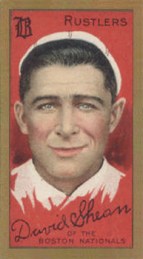
Dave Shean was the epitome of the Deadball baseball player on the field—he sacrificed runners to the next base, played a steady second base, and collected his share of singles. Off the field, Shean was the opposite of a hard-charging deadballer – he didn’t smoke, drink, chew tobacco, or swear, and regularly attendeDave_Shean.jpgd Sunday Mass.

Shean was born to Irish immigrants, Patrick Shean (a police officer) and Mary, on July 9, 1883, in Arlington, Massachusetts, a suburb five miles northwest of Boston. He grew up with three sisters in a deeply Catholic household at 58 Medford Street, next to Mt. Pleasant Cemetery, and across the street from St. Malachy’s (later St. Agnes) Church, which played a central role in the Sheans’ religious lives.

While attending Arlington High School, Shean’s athletic abilities became evident. The school’s Clarion  reported in June 1899 that the left fielder was “playing in good style, capturing nearly everything which comes [his] way.” Shean became a star of the team both at the plate and on the mound before transferring to Boston College High School.  After graduating from BC High, he attended Fordham University where he played the infield and outfield and occasionally pitched against other college, semipro, and major-league teams.

During time off from school, he played for a team in Rutland, Vermont, in the Twin Mountain League, where he was spotted in 1906 by Philadelphia Athletics scout Jim Byrnes.  Rather than finish his schooling, Shean jumped at the chance of signing with the Athletics, who were coming off an American League pennant. Second base was already occupied by Danny Murphy, who batted just over .300 the year Shean signed. But it wasn’t only Murphy who stood in Shean’s way. A week after Shean’s debut with the Philadelphia American League team, another second-sacker and college boy, Eddie Collins, started his 25-year career. Collins went on to become one of the best second basemen in baseball history and was inducted into the Baseball Hall of Fame in 1939.

With the  Athletics finishing a disappointing fourth in 1906, Connie Mack gave Shean some playing time at the end of the season.  He played in his first major league game on September 10, 1906, collecting a hit and  a sacrifice in a 2-1 win over Washington.

Within two weeks of his first game, Shean initiated of the rarest feats in baseball – a triple play. In a game against the St. Louis Browns, Bobby Wallace stepped to the plate with runners on first and second. The two runners took off with the pitch and Wallace hit a line drive to Shean, who snared the ball and threw to shortstop Simon Nicholls, who touched second to double off Pete O’Brien and relayed the ball to first baseman Harry Davis, who retired Ike Rockenfield before he could get back to the bag at first.

After a trial in which Shean played in 22 games, collecting 75 at-bats and batting .231, the A’s sent him to Montreal in the Eastern League in 1907. The following year, Shean played for Williamsport in the Tri-State League, where he led the league with 97 runs scored and hit .282 for the league winners.

With Murphy still the starting second baseman for the A’s and young Eddie Collins waiting in the wings, Mack sent Shean to the crosstown Phillies, where he played shortstop for 14 games (with a .146 average) in 1908.

Shean’s stay with the Phillies did not last long. After he had played 36 games in 1909, the National League team sent Shean to the Boston Doves, later renamed the Braves.

Back in his hometown, Shean got the chance to play regularly for the second-division team. He led the National League in putouts, assists, double plays, and chances per game for the position in 1910, while batting .247. One of his highlights that year came when the Doves played Brooklyn. Shean was on second after a walk and a sacrifice bunt. He took off for third with the pitch to Bill Sweeney. Sweeney grounded the ball in the hole between Jake Daubert and John Hummel. Hummel gobbled up the ball and threw to Daubert at first to get Sweeney for the out. At the same time, Shean rounded third and continued to home, beating Daubert’s throw to the plate. The scamper from second to home was becoming Shean’s “specialty,” according to the next day’s Boston Globe.

Following the Doves’ 100-loss season, Boston management tried to trade Shean to the New York Giants, but the team’s board of directors ultimately killed the deal. A month later, though, Shean escaped baseball purgatory and was sent to the Chicago Cubs, who had won the National League pennant in 1910.

With Heinie Zimmerman and Johnny Evers already splitting time at second base, Shean spent 1911 playing both middle infield positions. The Chicago Tribune called Shean “an infielder of sufficient experience to jump in a regular job with the Cubs should he be needed.”

When Shean hit camp before the 1911 season, manager Frank Chance spoke positively of him, as someone who could play all four infield positions. The Tribune, however, was more impressed with the second baseman’s wardrobe. “Shean really is in the class by himself when it comes to the glad rags. When he struck Cub headquarters, he looked as if he had been on a strap hanger all the way from the east, for there wasn’t a crease in his garments except those put there by his valet,” according to the Tribune. The crowded infield reduced his playing time, as Shean hit .288 in just 54 games for the Cubs.

The following year, 1912, the Cubs sent Shean to Louisville of the American Association, but he refused to go to Kentucky. The Louisville team suspended him. He was traded to the Braves in May 1912. After a week, Shean was on the move again, signing with the Providence Grays of the Eastern League.

Shean played the next few seasons with the Grays and resurrected his career by showing his leadership and new-found batting prowess in addition to his hard-nosed base-running and defensive ability.  “(In Providence), he had a chance to show some stuff. He was associated with players who had ability and pep,” Fred Hoey wrote in the Boston Herald and Journal.

That first year with Providence also proved a turning point in his life off the field. He married Eleanor Toomey, who the Boston Globe called a “popular East Boston girl,” a handball player and entertainer in shows like the unusually-named East Boston Catholic Literary Association. They settled in his hometown of Arlington.

Back on the ball field, Shean replaced Roy Rock, a Providence favorite, at shortstop for the 1912 season. Out of his natural position, Shean struggled. He moved to second the following year and his play improved.

The year 1914 proved a successful one for both Shean and the Grays. The Grays won the International League pennant (the Eastern League had changed its name) as Shean, the Grays’ captain, batted .334 in 150 games, while knocking out 173 hits, 22 doubles, 14 triples, and seven home runs; he also collected 35 sacrifice hits and 25 stolen bases.

During a one-week period that season, Shean also became acquainted with two people who would impact his life. On August 18, 1914, the Boston Red Sox sent a 19-year-old pitcher named George Herman Ruth to Providence for some seasoning. “Babe” later played with Shean on the 1918 Red Sox and the two remained friends after their playing days.

The other person to make his presence felt that week was David W. Shean Jr., born on August 22, 1914, to David and Eleanor.  David Jr. was the Sheans’ only child.

Following the pennant-winning 1914 season, manager Bill Donovan left Providence and took the top job for the New York Highlanders. Rather than search outside the organization, the Grays turned to their popular second sacker to take over the Providence reins.

The Sporting News reported Shean was “the popular choice for the job….Shean will be the manager that the fans are sure to cotton to. He is a clever second baseman – the best in the International League – and will be a worthy successor to Bill Donovan.”

The Providence fans also rejoiced with the naming of the new manager. At a preseason dinner for Shean, “Fighting Dave,” as the Providence Journal called him, was celebrated.

“No leader of a Providence club ever received heartier assurance of support and cooperation than those extended to popular Bill Donovan’s successor on the occasion of his official introduction as guardian of the destinies of the champions,” the paper reported.

Shean was confident of a first-division finish, though he warned fans that the pitching was not as strong as in its championship year.

Shean picked up his first win as a manager over the Buffalo Bisons in the second game of the 1915 season. The Grays fought with the Bisons throughout the year and headed into September with a slight lead.

The Grays’ season soured, though, when the team lost doubleheaders to Buffalo and Toronto, then dropped two more games to Toronto. Buffalo edged the Grays by two games for the title. Though the Grays came up short, fans didn’t cancel an already scheduled victory party after the season. Shean received a sterling silver tea set. The Providence Journal wrote that the Grays’ fans believed “no manager ever fought harder to give the city a pennant” than had Shean.

Shean managed one more year in Providence, but before the 1917 season, with the Grays under new ownership, he lost his job in Rhode Island. Hoey wrote that Shean “was a good manager, whose maxim was ‘Never drive the men. They are human. The easiest way is the best.’ This put Dave ‘in right’ with the players and the result was teamwork in its truest sense.”

In 1917, Shean was back in the majors, playing for Christy Mathewson’s Cincinnati Reds. Shean played in 131 games for the .500 team that included Hal Chase, one of the finest first baseman and crookedest players in baseball history. Though the Reds suffered through mediocrity that year, there were memorable moments. One game of note was when Fred Toney and James “Hippo” Vaughn hooked up for nine innings of double no-hit ball. Shean played second base that day as Cincinnati knocked out its first hit in the 10th inning and won 1-0.

Shean witnessed not only near perfection while playing second base that year. He also played a part in some lunacy. One play in particular was one of the strangest scoring plays possible. The Braves’ Wally Rehg didn’t run out a ground ball hit to Chase at first base. Rather than step on the bag for the out, Chase instead flipped the ball to Shean at second, who tossed the ball to Larry Kopf at shortshop. Kopf rifled the ball to right fielder Tommy Griffith, who completed the putout to pitcher Peter Schneider, who was covering first. The scoring line was 3-4-6-9-1.

Shean continued playing steady ball, leading the league’s second basemen in putouts, assists, double plays, and chances per game. “Any player who can survive a year with Cincinnati without impairing his baseball health is indeed a wonder,” Hoey wrote.

That was the last year Shean would have to play with major league mediocrity. During spring training in 1918, the Boston Red Sox traded pitcher George “Rube” Foster – who had refused to attend spring training because of a pay cut – to the Reds for the gritty second baseman from Arlington.Shean was back home, but a starting job was not guaranteed. Second-base legend Johnny Evers, who played with Shean on the Cubs, was once again his competition.

The Sox made the move for Shean because they were concerned with Evers’ age coupled with the fact that a number of Boston’s players were eligible for the draft and the nation was at war. Shean, on the other hand, was not subject to the draft because he was 34 years old and married with a son.

After reuniting with his old Providence teammate Ruth, Shean got the start at second base for the 1918 Red Sox on Opening Day, and the Sox beat the Athletics, 7-1, with Ruth getting the win.

The early season was not all good times, though. In the second game of the season, Shean was on the wrong side of pitcher Carl Mays’ surly nature. On that day, Mays was hurling a no-hitter going into the eighth inning. Joe Dugan led off for the Athletics with a hard groundball into the hole. Shean tried to trap the ball with both hands but slipped on the outfield grass. Dugan crossed first base safely and was awarded a single. Still fuming about the play after the game, Mays told the newspapermen that Shean should have been given an error.

Following that brief bump in the road, Shean’s 1918 campaign was one of his finest. “His skill in blocking off the stick, his value as a sacrifice hitter, and his effective batting in the pinches was one of the biggest factors in the Red Sox’ drive to victory,” reported the Boston Post. “And every ballplayer in both the big leagues will freely admit that Dave is one of the wisest infielders in the game and that neither Cobb nor anyone else can put anything across while Shean is on the watch.”

He batted .264 and played in 115 games in the 126-game season, shortened because of the war. Shean missed time that year because of neuralgia, foot problems, a stomach virus, and an infected foot.

The injury bug bit Shean again while the Red Sox practiced for the 1918 World Series. He dove for a line drive and the ball struck his throwing hand, ripping the nail and skin off the tip of his middle finger. Trainer Martin Lawler wrapped the finger in a splint and Shean was ready to play in his first World Series.

In the first game, Shean scored the only run of the contest. Stuffy McInnis singled him home from second base. The Sporting News wrote of Shean’s journey home that he “runs like a turtle on an iceberg.”

After the Sox won two of three games in Chicago, the teams rode the rails back to Boston. While on the trip, players discussed their possible winnings. Dissatisfied with the new rule that the World Series pot would be split between more teams (the two league champions would take 55½ percent of the money and split it 60/40), coupled with cheaper ticket prices that hurt the size of player bonuses, the players discussed taking action.

Shean, Harry Hooper, and the Cubs’ Les Mann tried to meet with the National Commission, which ran baseball at the time but were rebuffed. The dispute resurfaced later in the Series and the players threatened to strike.

Back on the field, Shean made one of the best plays of the Series in Game Four. In the sixth inning, Ruth walked Lefty Tyler. Max Flack grounded back to the pitcher, who threw wildly to second past shortshop Everett Scott. But Shean, backing up the play, caught the ball while on his knees and dove toward the base, crawling on his stomach to tag the base before Tyler’s foot made contact. Ruth retired the next two batters and continued his scoreless innings streak that stood as a World Series record until 1962.

The Red Sox wrapped up their fifth world championship in Game Six.  Shean scored the winning run and collected the last out in a 2-1 win. Though Shean hit only .211 in the series, he scored the first and final runs. Those were the only runs he scored in the six games, but then again, the Red Sox scored only nine runs in all.

World Series champion teams usually have a joy-filled off-season, but not the 1918 Red Sox. Baseball’s hierarchy was upset with the players’ “greedy” demand for more money during the Series. While previous winners received $3,000 to $4,000 for winning the Series, which was more than the annual salaries of most of the players, the Red Sox players collected only slightly more than $1,100.

National Commission member John Heydler told the players they would not receive their World Champion emblems “owing to the disgraceful conduct of the players in the strike during the series.” In response, Sox owner Harry Frazee bought several of the players pocket watches engraved with their names and “Red Sox 1918 champions,” but the National Commission snub haunted the players long after their playing days.

Shean’s grandson, Henry, said his grandfather didn’t talk much about his baseball career, which he said could have been because of the 1918 slight. “Growing up, we always talked about the Red Sox. But he didn’t talk about his career. I think he may have been unhappy about the way things went down,” said Henry Shean.

For the following decades after the snub, Hooper sent letters to the baseball commissioners asking for the team’s emblems. In one printed letter, the Hall of Famer even mentioned Shean, noting that 1918 was his only World Series appearance. Seventy-five years after the snub and nearly 10 years after Hooper’s death, the relatives of the 1918 Red Sox finally received their honors. During a ceremony at Fenway Park, the Red Sox gave the families commemorative pins in honor of the 1918 season.

After the World Series year of 1918, Shean played in only 29 games and was batting just .140 when the Red Sox released him in August 1919.

Many baseball players struggle with lives after baseball, but not Shean. He returned to his position at Nathan Robbins Company, a poultry firm that employed him during the offseason.

In a December 1918 story in the Boston Post, Hoey wrote, “When the baseball season is over, Dave does not sit around clubrooms or pool halls and tell the natives what’s best in baseball. Instead he exchanges his baseball uniform for a butcher’s frock and (goes) to the big market where he handles more fowls.”  Shean spent decades after baseball working for the poultry company in the dank basement of Boston’s Quincy Market.

“You get a tough one now and then just the same as you do in baseball,” Shean said of his poultry work. “Once in a while, I run across one that has spurs like those that Ty Cobb wears.  I sidestep those babies.  There are all kinds of birds in the poultry game as there are in the big leagues.  I get plenty of chances to size up all the varieties.”

Shean worked his way up the company ladder and became president of the business. “His personality is one of the firm’s biggest assets and the Dave Shean smile brings hundreds of new customers every year,” reported the Boston Post.

Shean stayed in touch with the game. According to reports at the time, the Arlington man made trips to Fenway Park when his old friend Babe Ruth came to town with the Yankees. During those visits, Shean presented the Babe with poultry, which the Sultan of Swat devoured.

“He didn’t make it a point to talk about his famous friends,” recalled his granddaughter Leslie Flanagan. “He didn’t make a big deal out of it though he really had quite an exciting life as a younger man. He was very modest about the whole thing.”

Shean remained with the poultry business until the end of his life. His only child, David Jr., who served in World War II and graduated from Harvard University, followed in his father’s footsteps by taking over the leadership role at Nathan Robbins Company. Though Shean did not return to pro ball after his retirement, he played and coached baseball on Arlington’s Spy Pond Field. He also participated in old-timers games in the Boston area.

Shean’s life came to an end in 1963 after the 77-year-old widower suffered numerous injuries in a car accident. He died at Massachusetts General Hospital on May 22. His death was mourned by his hometown. The local newspaper, the Arlington Advocate, called Shean “one of Arlington’s best known and loved citizens.”

Advocate columnist Leonard Collins wrote that Shean was “a very quiet and unassuming man. Dave hardly talked about his playing days, but on such occasions, he was wonderful to listen to as he spoke of the men who were known all over the country.” Shean’s funeral was held at St. Agnes Church, where he had spent many hours attending services. He was buried at St. Paul’s Cemetery in his hometown.

Thinking back on her father-in-law’s life, Helen Shean remembered the former ballplayer as the “most generous, thoughtful, quiet man I ever knew.”

After his death, Advocate columnist Collins summed up Shean’s life by writing, “On or off the field, Dave did just great. His quiet charities over the years were many and no one would know about these if the recipients had not divulged his name. Arlington was his home always and he never lost interest in its people or activities.”

Personal Finance

Personal Loan Guide

Originally published on Wise Piggy. NOTE: This article was published in 2016 so information about the loans and banks may have changed. 

Personal loans can be a powerful tool to help pay down credit card debt, secure cash for emergencies, or help with a major home project. Benefits include:

  • Interest rates that are usually lower than credit cards.
  • A fixed APR so payments remain the same for the life of the loan.
  • Potentially positive impact on your credit score.
  • Unsecured debt, so there is no need to put up collateral, such as a house or other property.

Personal loans are also a booming corner of the lending marketplace, via banks, credit unions or finance companies. TransUnion reports that unsecured personal loan balances reached $92 billion in the first three months of 2016, doubling from the same period in 2012.

Personal Loan Basics

Personal loans are used for a number of reasons:

  • Debt consolidation
  • Credit card bills
  • Wedding
  • Home project (especially if you don’t have enough equity in your home)
  • Healthcare expenses
  • Vacations
  • Car purchase and repairs

How is a personal loan different from other options?

A personal loan is usually unsecured, which means that you don’t have to put up collateral, such as your house, which is the case for secured loans, such as home equity loans and mortgages.

The major benefit of an unsecured loan is you have peace of mind that you won’t have your home taken away if you fail to pay it off. The downside of an unsecured loan is you will likely pay higher rates than a secured loan because the lender is taking a bigger risk.

Benefits of Unsecured Loans

  • No collateral
  • Quicker approval process
  • Interest rate does not change

Drawbacks of unsecured loan

  • Higher rates
  • Need better credit history than a secured loan
  • Lower loan limits than a secured loan

What kind of credit score do you need? 

You can see by the above chart that most lenders expect at least a 600 credit score, but there are others that have no minimum credit score.

You will have a harder time getting an unsecured personal loan than a secured loan, such as a mortgage or car loan if you have bad credit. The reason is a borrower puts up collateral for a secured loan. The lender is taking a bigger risk loaning money when no collateral is involved so the rates are higher for unsecured loans.

Getting a great rate

Make sure that before you apply for a personal loan that you do all you can to maximize your credit score. This can save you thousands over the course of paying off a personal loan.

Why? A lender will give a borrower with a higher credit score a better, lower rate.

So, if you have a credit score of 600 or less, it’s best to spend some time working on that score. Here are three ways you can improve your credit score before applying for a personal loan:

  • Reduce credit card use.
  • Pay down your balances as much as you can.
  • Don’t get a new credit card in the months leading up to your personal loan application.

How much can a higher credit score save you?

Here is an example to show exactly how a higher credit score is a major advantage in the loan market. It means you pay less in interest over the life of a loan and can have lower monthly payments at the same time.

 
Personal Loan at 600 FICO
Personal Loan at 700 FICO
Amount Borrowed
$20,000 $20,000
Interest Rate 20% 12%
Monthly Payment $743.28 $664.29
Total Interest Paid $6,757.66 $3,914.30
Total Amount Paid $26,757.66 $23,914.30
Payoff Time 3 Yrs 3 Yrs

How a personal loan may improve your credit score

Getting a personal loan to consolidate your credit cards will increase your credit score in the long term – as long as you make regular payments, don’t open new accounts and don’t fall back into the credit card trap again.

But a word of caution: When you first get a personal loan, your credit score will likely drop. This is normal. It’s because a new loan is seen an additional risk.

The good news is that consolidating credit card debt into a personal loan could help your credit score:

  • By paying your personal loan on time, not opening new accounts and not using your cards recklessly again, your debt-to-credit ratio will increase on your credit cards. About 30 percent of your credit score is based on the debt-to-credit ratio, or how much credit is available on your cards. Only your payment history makes up a larger percentage of your credit score. A better debt-to-credit ratio will mean a better credit score.
  • A personal loan is seen as a different type of credit than credit cards – installment vs. revolving. Having a greater diversity of types of credit, such as loans and mortgages, is better for your score than having just credit cards.

Here’s an important caveat – think of your personal loan as a do-over if you need to consolidate credit card debt. Take what you learned from getting into your credit card situation and make sure it doesn’t happen again.

You shouldn’t see the zero balances on your credit cards as a chance for a spending spree.

It’s OK to use your credit cards occasionally so your card isn’t closed because of inactivity. In fact, it’s good for your credit score to occasionally use your cards for a regular purchase like groceries. But make sure you pay off your bill and don’t use your cards for unnecessary purchases or things you can’t afford.

Another important credit score-related note: You may want to close your credit cards, but this can have a negative impact on your credit score. Instead, use your credit cards wisely and pay them off monthly.

Applying for a Personal Loan

Many lenders will ask you why you are applying for a loan. Some lenders may even limit how personal loan money is used. For instance, one lender might only allow you to consolidate credit while another might forbid you to pay off your college tuition with a loan.

The APR may also vary depending on the reason for your loan.

For these reasons, it’s important to let the lender know why you need a loan.

Prepayment penalties

If you hope to pay off your loan early, check to see if there is a pre-payment penalty. You don’t want to be penalized if you are able to pay off the loan quicker than your loan terms. If you do encounter a pre-payment penalty think twice about taking out that loan.

There’s more than APR

Don’t just choose a lender for one thing, such as a low APR, though this is the most critical factor. You’ll want to take everything into account.

As you will see on the above chart, you’ll want to compare APR, loan amounts offered, loan terms and origination fee. If you need the money quickly, the turnaround after approval may be critical for you. If having face-to-face interaction is important, you will likely want to find a lender with a local branch or superior customer service.

What’s an origination fee?

A term you might not recognize is origination fee, which is added to the loan amount that serves as a processing fee. It can also be called an activation fee.

For instance, let’s say your $20,000 loan includes a 5% origination fee. That will add $1,000 to your loan amount. This might not mean much if you get a great APR, but it’s important to consider.

Hard pull versus soft pull

You’ll want to consider whether the lender requires a hard pull of your credit history to apply for a loan or to find out rates. A hard pull of your credit history will likely affect your credit score. This might not concern you, but it’s something to think about if you will need the highest credit score possible in the near future.

If you get declined by a lender who performs a hard pull, your score will be lower if you apply for a personal loan with another company. Don’t apply for a personal loan unless you really need one.

How do you apply?

The good news for prospective borrowers is it’s never been easier to apply for personal loans. Many companies now allow you to apply by providing only minimal information, but others might require more information, such as:

  • Identification
  • Past income
  • Debt obligations
  • Social Security number

One important piece to note about applying for a loan. Some lenders may require an in-person visit to a local branch in order to get a loan approved. You’ll want to find this out before starting the process.

One last piece of advice

Be careful with what you borrow. Just because a lender offers up to $25,000 doesn’t mean you need to borrow that much. Know what you need, don’t ask for more and then make sure you pay each month.

Best Personal Loans

Choosing the right lender for a personal loan can be a complicated and confusing process. What makes it even more difficult is some lenders are better than others in specific areas.

We researched which lenders stand out in different categories. We’ve included two lenders for each category to give you variety and also because most lenders don’t offer loans in all states.

Best Lenders for Excellent Credit

Earnest

About: The San Francisco-based company is a great bet for a borrower with good credit who wants to pay off the loan as soon as possible.

Earnest’s APR is one of the best APR ranges in the personal loan marketplace. Though there is no minimum credit limit to apply for an Earnest personal loan, the company’s loans are geared for those with good credit.

Loan terms are between 12 months and 36 months and there is no origination fee.  There are no penalties for making extra or early payments.

Earnest loans are available in 36 states.

You should be aware that the company performs a hard pull of your credit record when you apply so your credit score may be impacted.

In order to get approved, you need to be employed, possess savings enough to cover at least a month of “normal expenses,” have a good credit history, carry a positive bank account balance and make enough money to support paying back the loan in addition to your normal living expenses.

Earnest isn’t for those with little or poor credit but could be the right choice if you have a good credit history.

Penfed Credit Union

About: Established in 1935 and one of the largest credit unions, PenFed Credit Union is a great option for those with good credit – especially for borrowers who need time to repay the loan.

Penfed’s loan terms stretch all the way to 60 months so you have the flexibility to pay the loan in five years if needed.

The credit union expects a minimum 700 credit score so you need to have good credit to expect to get approved.

APR is competitive and loan terms are either 36 months, 48 months or 60 months. The APR is higher for the longer loans. There is no origination fee or pre-payment fee so you won’t get charged a penalty if you pay it off sooner.

Penfed, which offers personal loans in all 50 states, takes a day to fund approved loans.

You will need to join the credit union, but you can do that during the application process.

Best Lenders to Get Money Quickly

OneMain Financial

About: If your personal loan gets approved by noon, you can get your money the same day from OneMain Financial.

OneMain Financial, which was founded in 1912 and owned by CitiBank, offers loans in 43 states. It has branches across the country so OneMain Financial is good if you want face-to-face interaction.

OneMain Financial’s APR ranges are on the high side. You can loan as little as $300 or as much as $15,000. Loan terms are limited to 36 months and 60 months.

There is no origination fee and no prepayment penalties, which means you can pay off your loan early without any fees if your financial situation improves.

Best Lenders for Low APR

SoFi

About: SoFi has one of the lowest APRs in the personal loan marketplace and is a great alternative to consolidate credit cards and pay a lower rate.

SoFi’s APR is low and loan terms are 36 months, 60 months or 84 months and you can pay off the loan early and not get penalized. There is no origination fee and the loans are available in 47 states.

Loans range from $5,000 to $100,000.

The San Francisco company, which has funded more than $4 billion in loans, reviews more than credit score when deciding on loans. SoFi also looks at career experience, monthly income versus expenses, financial history and education.

One plus is SoFi offers unemployment insurance so you are able to miss a limited number of payments if you lose employment.

Wells Fargo

About: If you want the peace of mind of a well-established financial institution, Wells Fargo could be the right choice for your personal loan – but you’ll have to be a Wells Fargo customer to apply.

Unlike the newer online lenders, Wells Fargo has been around since 1852 and offers banking, insurance, investments, mortgage and consumer and commercial finance.

Wells Fargo offers personal loans with no origination or prepayment fees. It has competitive APR and loans up to $100,000. The lender also has loan terms that range from 12 to 60 months so it suits nearly every borrower.

The lender says you can have a decision about a personal loan within 15 minutes and you can get funding within the same day. Established name, quick turnaround for funds, flexibility in terms and no fees make Wells Fargo a strong choice in the personal loan market.

Best Lenders for Millennials

Pave

About: Geared to young borrowers, Pave offers low APR to help young people “further their education, relocate for their dream career or get their finances back on track.”

Based in New York City, the company allows you to chat online with the Pave team.

The company analyzes a prospective borrower’s credit score and history and takes into account a person’s work history, current employment, education and future earning potential.

Pave offers loans between $3,000 and $25,000 with loan terms of only 24 months or 36 months.

Personal loans are available in 35 states and you can get money within a few business days if approved.

There is an origination fee of between 1% and 2%, but there is no prepayment penalty so you won’t be charged if you’re able to pay off the loan quicker.

Upstart

About: If you have a great credit history, Upstart could give you a personal loan with a low APR. If your credit isn’t so good, you might wind up paying much higher rates.

The company promotes its easy loan application process that allows prospective borrowers to apply in minutes. An added benefit is that there is no hard pull to apply so you don’t have to worry about your credit score taking a hit when you apply.

Upstart’s personal loans are limited to 36 months, but there’s no prepayment fee so you can pay off before the three-year timeframe.

Upstart gives loans between $3,000 and $35,000. It only takes a day to get money after a loan approval.

On the downside, there is an origination fee of between 1% and 6% so you’ll want to keep that in mind and calculate that cost coupled with a possible low APR.

Best Lender for No Fees

Discover

About: You may know Discover from their credit cards, but the company also offers personal loans that have great APR and no fees.

Discover provides varied loan terms, low APR, quickness in payment and no origination or prepayment fees.

Discover’s loan approval process may take a day depending on circumstances. Funds are available as early as the next business day once the borrower accepts the terms.

A real benefit of Discover is the lack of fees. There are no origination, prepayment or closing fees.

The lack of a prepayment penalty means you can take out a loan for a longer period of time, but pay it off early if your finances improve.

Personal Finance

5 Ways Credit Cards Can Improve Your Health

Originally published on CardRatings.com.

When not used properly, credit cards can hurt your mental – and, of course, your financial – well-being. But, when used correctly and smartly, your overall physical, mental and financial health can actually benefit when you use your credit cards.

The first step with credit cards is understanding what it takes to create credit health with your cards. This basically means using your cards the right way and not sinking further into debt.

A study of young adults found that household financial debt hurts psychological health and overall health. High debt is “associated with higher perceived stress and depression, worse self-reported general health and higher diastolic blood pressure,” according to at least one study.

But credit cards themselves aren’t the root cause of the evil. It’s how you use them that causes the problems.

Personal finance columnist Liz Weston says there’s no credit card reward rich enough or “healthy” enough to offset the cost of carrying credit card debt.

“When you’re carrying a balance, your primary concern should be getting the lowest possible interest rate so you can get out of debt faster,” she says.

But for those of you already in the good habit of paying your balance in full every month, you could consider a card that will reward another of your good habits: taking care of yourself with spa treatments, diet, and exercise, Weston says.

So, let’s take a look at some ways in which your credit cards can actually help you get physically healthy.

Put your gym membership and fitness or yoga classes on a credit card that earns rewards

You have a trip planned to Europe or you want a bigger TV. Get a rewards card to help pay for those purchases while also using that card to pay for a gym membership. That way, you’re collecting points while enjoying the health benefits of physical activity. Auto-payments, whether for your gym membership or your electric bill – are a fantastic way to rack up rewards. Some credit cards even pay bonus rewards for promptly paying your bill. BUT (and this is a big BUT) you must pay these charges off each month for this method to make sense.

Furthermore, be sure you’re paying on time or you’ll be accruing finance charges and potentially late fees as well.

Use bonus points to buy personal fitness equipment and training

You’ve had your eyes on a piece of fitness equipment that’s advertised during your favorite show, but you can’t fit it into your budget. Sign up for a rewards credit card that allows you to cash in your rewards and pay toward personal fitness equipment. In this scenario, don’t sign up for a travel rewards card that will only allow you to use points for specific travel. Instead, look for a rewards card that makes the most sense for you and your lifestyle.

Consider a card that offers cash back and commit to depositing your cash back into a savings account that you only tap into when you’re ready to make that big purchase. In other words, use your rewards credit card as a sort of savings plan that doesn’t require you to do anything more than make the everyday purchases you would be making anyway.

Use credit cards that reward healthy lifestyles

There are actually credit cards out there that can help you get healthy.

Discover lets you earn anywhere from 5 percent to 10 percent cash-back bonus rewards by making purchases through its online shopping portal, Discover Deals, which features top-of-the-line fitness retail partners, such as Nike, Finish Line, and Reebok.

American Express cardholders can use their membership rewards points to buy health and fitness items such as:

  • Workout accessories, such as heart monitors, fitness trackers and balance balls

  • Home gym equipment, such as treadmills, elliptical machines, and exercise bikes

  • Spa gift cards from SpaFinder and Red Door Spas

“You’re developing better credit, paying off your bills each month and getting the rewards,” says Rocco Castellano, Las Vegas-based fitness expert and personality, business coach and author.

Leave your car at home and shop with your credit card

The beauty of a credit card is that you don’t have to bring your bulky wallet or pocketbook with you when you shop. One credit card in your pocket is enough. Better yet, in many places, you can use a smartphone app or mobile wallet to make purchases so you don’t even need the physical card.

How does this help your fitness? Let’s say there is a store that’s a mile away and it’s easy to get there by foot or bike. Leave the car at home and take a brisk walk or ride your bike. You’ll get exercise and save on gas, which could help you pay your credit card bill.

When Ellie Kay and her husband got rid of their second car, it forced them to walk more – and they benefited financially, too.

“We were out of debt in two and a half years and my husband got really buff,” said Kay, who is “America’s family finance expert®” and author of 14 books, including “The 60 Minute Money Workout.”

Dump high-interest cards and transfer balances to lower APR card (use the savings for fitness)

If you’re paying monthly interest charges, it’s important to make sure you have the lowest APR possible; it could be that you qualify for a 0 percent offer, so shop around for low introductory APR cards or balance transfer credit cards.

If possible, transfer your balance to a 0 percent introductory APR card, such as Chase Slate, winner of CardRatings 2017 Editor’s Choice award for Best Balance Transfer Credit Card. Then, while you’re paying down the principal, use the savings on interest for a gym membership or a fitness class as long as whatever you set as your monthly credit card payment is enough to pay off the principal before your lower APR period ends.

Paying off your balances in full each month is a good habit. So is diet and exercise to maintain a healthy weight and stay active. Financial well-being and physical well-being go hand-in-hand, so get started working on both.